Top Wall Solar Light Manufacturers for Wholesale Buyers?

Time:2026-09-06 Author:Isabella
0%

Wholesale buyers are rethinking outdoor lighting as energy costs, sustainability targets, and customer expectations continue to rise. Wall Solar Light products now compete on more than appearance. Battery capacity, charging performance, lumen accuracy, weather resistance, and warranty support can determine whether a shipment succeeds.

The International Renewable Energy Agency reported 1,419 GW of global solar photovoltaic capacity by the end of 2023. This broader growth supports stronger solar-light supply chains, but it does not guarantee reliable wall-mounted products. The World Bank’s Lighting Global quality approach also highlights practical concerns, including battery durability, safety, performance, and truthful product claims. Buyers should therefore inspect test reports, IP ratings, photovoltaic panel size, battery chemistry, and replacement policies before approving large orders.

As IEA Executive Director Fatih Birol stated, “Solar PV and wind are going to be the backbone of the new global energy system.” His observation applies to lighting, though not without limits. A small solar panel cannot perform equally under every climate, mounting angle, or winter condition. That detail is easy to overlook.

This guide evaluates top Wall Solar Light manufacturers for wholesale buyers through an evidence-based lens. It considers factory experience, product engineering, certifications, customization, minimum order quantities, and after-sales reliability. Product photos can look convincing. Field performance matters more.

Some supplier claims may still require independent verification. That is where careful sourcing becomes valuable. The best manufacturer is not always the cheapest. It is the partner that delivers consistent light, honest specifications, and dependable support across every shipment.
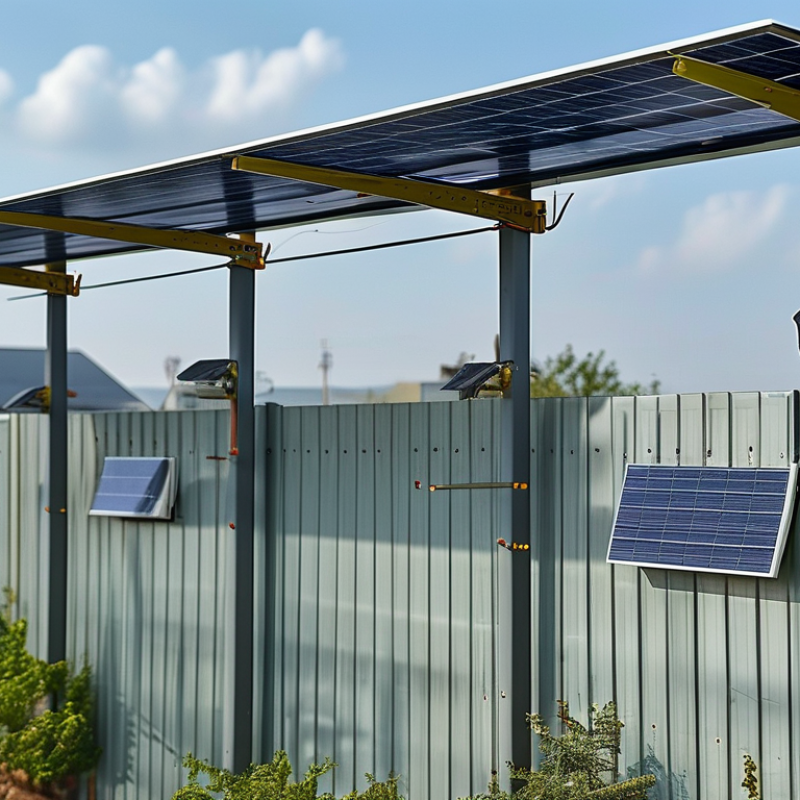
Top Wall Solar Light Manufacturers for Wholesale Buyers?

What Are Wall Solar Lights and How Do They Work?

Wall solar lights are compact outdoor fixtures that produce light without a wired power connection.

A photovoltaic panel converts sunlight into direct-current electricity during daylight. A charge controller sends that energy to a rechargeable battery. After sunset, a light sensor activates the LED module and the stored power runs the fixture.

Some models also include motion detection, dimming, or timed operation.

The technology is simple, but performance depends on details.

The International Energy Agency reported that global solar photovoltaic generation increased by 23% in 2023. IRENA recorded about 1,419 GW of installed solar capacity worldwide at the end of 2023.

These figures show stronger solar infrastructure, but they do not guarantee reliable lighting in every location. Cloud cover, winter angles, dust, battery aging, and nearby shade can reduce nighttime output. A bright first impression may become a weak result after several cloudy days.

Tips:

Wholesale buyers should check measured lumens, battery capacity, charging time, LED runtime, and IP protection ratings. Ask for test reports, not only catalogue claims.

Motion sensors can extend runtime, especially in low-sun regions. Choose replaceable batteries when possible.

In my experience, panel placement deserves more attention than many buyers expect. A technically efficient lamp still performs poorly beneath a roof edge or tree canopy. Testing samples across several evenings is wiser than trusting one sunny-day demonstration.

Key Features to Compare Before Choosing a Manufacturer

Top Wall Solar Light Manufacturers for Wholesale Buyers?

Before choosing a manufacturer, compare lighting performance under real conditions. Check lumen output, beam angle, panel wattage, battery capacity, and charging time. Ask for test reports, not only catalog figures. A lamp rated for 1,000 lumens may deliver much less after several cloudy days. That difference affects customer complaints and replacement costs.

Housing quality also deserves close inspection. Look for corrosion-resistant aluminum, UV-stable plastic, secure cable seals, and an appropriate IP rating. An IK rating can show resistance to impact during transport and installation. Request samples before placing a large order. Test them outside for two weeks, including rainy nights and short winter days. Small details matter. A loose mounting screw can damage an otherwise good product.

Reliable manufacturers should provide traceable quality control records, battery safety documentation, and clear warranty terms. Compare sample approval procedures, defect allowances, minimum order quantities, packaging strength, and spare-part support. Ask how they handle inconsistent color temperature or early battery failure. Their response often reveals more than a sales presentation. Pricing needs careful judgment. The cheapest offer may use weaker cells or thinner housings, while the highest price may add little value. I would also review production capacity and delivery history, although these records are not always complete. That uncertainty deserves a written question, not an assumption.

Top Wall Solar Light Manufacturers for Wholesale Buyers

Top Wall Solar Light Manufacturers for Wholesale Buyers

For wholesale buyers, top wall solar light manufacturers are not judged by price alone. They should provide stable production, tested batteries, clear specifications, and consistent quality across large orders. The IEA Renewables 2024 report recorded nearly 510 GW of new renewable capacity in 2023. Solar power represented about three-quarters of that growth. This expansion increases demand for practical solar lighting, especially in outdoor residential and commercial projects. Buyers should examine LED efficiency, battery chemistry, charging time, lumen output, and weather resistance. Ask for test reports, not attractive promises.

Manufacturers with reliable OEM and private-label experience can support packaging, installation guides, and regional plug or mounting requirements. The Global Off-Grid Solar Market Report has reported millions of off-grid solar products sold annually, showing strong demand for accessible lighting systems. However, wholesale success depends on more than market growth. A bright sample may perform poorly after several cloudy days. That is an uncomfortable detail, but it matters. Check sample units in real weather before approving mass production. Review IP ratings, operating temperatures, warranty terms, spare parts, and factory inspection records.

Tips: Request three production samples, test them for at least two weeks, and compare evening brightness after cloudy charging days. Confirm whether advertised lumens represent initial output or sustained performance. Small details often expose large quality differences. Avoid suppliers that cannot explain battery capacity, certification scope, or replacement procedures clearly.

How to Assess Factory Quality, Capacity, and Customization

For wholesale buyers, factory quality begins with evidence, not polished samples. IRENA’s Renewable Capacity Statistics 2024 reported 345 GW of solar additions worldwide in 2023. That growth increases component demand, but it does not guarantee dependable wall lights. Request production records for LEDs, panels, batteries, and controllers. Check batch traceability. Ask for IEC 60598 safety testing and IEC 60529 ingress results. Reports should identify the model, laboratory, test date, and battery configuration. “Tested” is too vague.

Capacity needs measurement. Request 12-month output, peak monthly volume, staffing, shifts, and machine lists. Compare those figures with purchase orders and shipping records. Walk the assembly line, if possible. Count soldering stations, aging racks, and inspection benches. A supplier claiming 100,000 units monthly should show material flow for that scale. The IEA PVPS Trends 2024 report recorded 456 GW of new photovoltaic capacity in 2023, reflecting strong solar-sector demand. However, demand can expose weak production controls. Order a pilot batch. It may reveal loose screws, uneven brightness, damaged packaging, and slow charging.

Customization is more than a logo. Confirm motion-sensor settings, cable lengths, battery chemistry, firmware, carton artwork, and spare-part ownership. Require written change control. One overlooked change can reduce night runtime. Use buyer-defined AQL sampling, random runtime checks, and water-resistance testing. No factory is flawless. The buyer should document failure limits and corrective actions. A custom enclosure may also disrupt tooling, testing, and delivery dates.

Top Wall Solar Light Manufacturers for Wholesale Buyers? — How to Assess Factory Quality, Capacity, and Customization
Assessment Dimension What Wholesale Buyers Should Verify Reliable Evidence or Practical Benchmark Why It Matters for Wall Solar Lights Priority Suggested Weight
Product Safety and Compliance Confirm whether the product design, charger, battery, LED driver, and enclosure meet the regulations required in the destination market. Request current test reports, declarations of conformity, material documentation, and traceable product samples. Verify that documents match the exact model and electrical configuration. Non-compliant products may be rejected by customs, marketplaces, distributors, or local authorities. Critical 20%
Ingress Protection and Outdoor Durability Assess protection against rain, dust, humidity, temperature changes, UV exposure, and corrosion. For outdoor wall applications, an IP65-level enclosure is a practical baseline to discuss. Ask for test conditions, sample inspection, gasket design, drainage details, and corrosion-control methods. Wall lights are continuously exposed to weather; weak sealing is a common cause of water ingress and early failure. Critical 15%
Battery and Solar Charging System Check battery chemistry, rated capacity, protection circuitry, charging behavior, cycle life, and replacement availability. Require battery datasheets, incoming inspection records, protection specifications, and measured capacity results from production samples. Confirm that the charge controller prevents overcharging and excessive discharge. Battery performance directly affects brightness, operating time, seasonal reliability, and warranty cost. Critical 15%
LED and Optical Performance Evaluate LED efficiency, color consistency, beam distribution, brightness claims, and motion-sensor response. Compare samples under the same test conditions. Ask for LED specifications, measured lumen data, color-temperature tolerance, sensor range, detection angle, and lighting-mode settings. Consistent light output and sensor behavior reduce customer complaints and improve product reviews. High 10%
Factory Quality Management Review incoming-material inspection, in-process controls, final inspection, traceability, corrective actions, and complaint handling. Look for documented inspection procedures, sampling plans, calibration records, batch codes, defect records, and corrective-action reports. A quality-management certification can support, but not replace, an audit. A repeatable quality system is more important than a visually attractive sample when ordering large quantities. Critical 15%
Production Capacity and Lead Time Determine monthly output, assembly-line capacity, peak-season availability, component constraints, and realistic lead times. Request capacity by model, current production schedule, staffing pattern, equipment list, standard lead time, peak-season lead time, and written production milestones. Capacity planning helps prevent late shipments, split deliveries, and stock shortages during seasonal demand. High 10%
Customization Capability Assess options for housing color, logo placement, packaging, firmware or lighting modes, battery configuration, mounting hardware, and user manuals. Ask for an engineering review, minimum order quantities, tooling fees, sample-development timeline, artwork requirements, and approval procedures before mass production. Controlled customization supports private-label programs without creating unmanageable engineering or quality risks. High 10%
Supply-Chain Stability Check the sourcing of batteries, solar panels, LEDs, sensors, plastics, fasteners, and packaging materials. Request a component list, approved substitute policy, supplier-change notification process, and evidence that critical parts can be replenished consistently. Uncontrolled component substitutions can change brightness, battery life, appearance, or compliance status. High 5%
Packaging and Export Readiness Evaluate packaging protection, carton strength, labeling, palletization, shipping marks, and documentation accuracy. Conduct a carton-drop or transport-risk review where appropriate. Confirm packaging drawings, carton dimensions, product counts, barcode requirements, and export-document procedures. Proper packaging reduces breakage, moisture damage, fulfillment errors, and landed-cost surprises. Medium 5%
Warranty and After-Sales Support Clarify warranty duration, covered defects, response time, replacement policy, spare parts, and technical support. Obtain written warranty terms and a defect-resolution workflow. Confirm how failures are analyzed and whether replacement components or complete units are available. Effective after-sales support protects distributor margins and helps maintain long-term customer relationships. High 5%
Pre-Shipment Verification Establish how product quantity, appearance, function, packaging, accessories, and labels will be checked before shipment. Use an approved inspection checklist covering random sampling, charging, lighting modes, sensor operation, physical damage, accessories, and carton markings. Pre-shipment inspection provides an independent checkpoint before the goods leave the factory. Critical 5%

Wholesale Pricing, Certifications, Shipping, and After-Sales Support

Top Wall Solar Light Manufacturers for Wholesale Buyers?

Wholesale pricing should be judged beyond the unit cost. In procurement practice, buyers should compare lamp brightness, battery capacity, housing material, and packaging. A low quote can hide weaker batteries or limited quality control. Request a tiered price list for sample, carton, and container quantities. Confirm whether tooling, labels, and spare parts cost extra.

Certification evidence matters. Ask for current test reports covering electrical safety, electromagnetic compatibility, ingress protection, and restricted substances. Requirements differ by destination market. Do not accept a certificate image without checking its issuing laboratory and product model. Shipping also needs close review. Confirm carton dimensions, loading quantity, delivery terms, insurance, and estimated port dates. Battery declarations may be necessary for certain solar lighting designs. Delays happen. Build time into your launch plan.

Tips: Compare landed cost, not only factory price. Ask for a pre-shipment inspection. Keep written records of agreed specifications. A clear warranty should state coverage, response time, replacement rules, and labor responsibilities. Useful support includes installation guidance, troubleshooting videos, and accessible spare parts. Some suppliers promise fast service, yet respond slowly after payment. This is worth testing before a large order. Send technical questions and measure their response quality. A small trial order may reveal packaging damage, uneven lighting, or unclear instructions. That extra step costs time, but it can prevent expensive corrections later.

FAQS

: How do wall solar lights work?

: A photovoltaic panel captures daylight and stores energy in a rechargeable battery. After sunset, a light sensor activates the LED module. Some models use motion detection or timed operation.

What can reduce nighttime brightness?

Nearby roofs, trees, dust, and cloudy weather can reduce charging. Winter sunlight may arrive at a weaker angle. Several cloudy evenings can expose poor battery capacity.

Which specifications should wholesale buyers compare?

Compare measured lumens, beam angle, panel wattage, battery capacity, and charging time. Check LED runtime and the IP protection rating. Catalogue numbers can look better than real results.

How should buyers test product samples?

Test samples outdoors for about two weeks. Include rainy nights and short winter days. Check brightness, charging speed, sensor response, mounting strength, and battery runtime. Test samples outdoors.

What housing details indicate better durability?

Look for corrosion-resistant metal, UV-stable plastic, sealed cables, and secure mounting points. An impact-resistance rating can help assess transport and installation risks. A loose screw matters.

How can buyers assess factory quality?

Request batch records for LEDs, panels, batteries, and controllers. Ask for safety and water-resistance test reports. Reports should identify the model, laboratory, test date, and battery setup. “Tested” alone is too vague.

How can buyers verify production capacity?

Request twelve-month output, peak monthly volume, staffing, shifts, and machine lists. Compare claimed capacity with purchase orders and shipping records. Inspect assembly stations, aging racks, and inspection benches when possible. Numbers need evidence.

What should customization agreements include?

Confirm sensor settings, cable lengths, battery type, firmware, packaging artwork, and spare-part ownership. Use written change control for every approved modification. A small change may reduce runtime or delay delivery.

Is the lowest price usually the best choice?

Not necessarily. Lower prices may reflect weaker cells, thinner housings, or limited quality checks. Higher prices may also add little practical value. Compare test results, defect limits, warranty terms, and delivery history before deciding.

Conclusion

This guide explains what a Wall Solar Light is and how it uses solar panels, rechargeable batteries, LED technology, and sensors to provide reliable outdoor illumination without direct grid power. It highlights the key features wholesale buyers should compare, including brightness, battery capacity, solar charging efficiency, motion detection, waterproof performance, lighting modes, materials, lifespan, and installation design. Choosing the right manufacturer requires more than reviewing product appearance; buyers should assess factory quality control, production capacity, testing procedures, customization options, packaging, and consistency between samples and mass production.

The article also examines practical wholesale considerations such as unit pricing, minimum order quantities, certifications, lead times, shipping arrangements, warranty terms, spare parts, and after-sales support. By evaluating these factors together, buyers can identify a dependable supplier capable of delivering stable quality, flexible designs, competitive pricing, and long-term cooperation for different residential, commercial, and public outdoor lighting projects.


Isabella

Isabella

Isabella is a dedicated marketing professional with a sharp focus on driving brand growth and engagement through strategic content creation. With an extensive background in digital marketing, she combines her passion for storytelling with her keen understanding of industry trends to deliver......